Is Grading Worth It for Magic: The Gathering Cards?
PSA, BGS, and CGC grade Magic cards on a 1–10 scale. Here's when grading makes financial sense, when it doesn't, and what to expect from the process in 2026.
Scrytics · May 3, 2026 · Updated April 19, 2026
Professional card grading turns a raw Magic: The Gathering card into a sealed, numerically-rated object with a third-party authentication stamp. For some cards it’s a smart investment. For most, it’s a waste of money. Here’s how to tell which is which.
The three grading services
PSA (Professional Sports Authenticator) — the largest and longest-established. Dominant in the Pokemon and sports card space, expanded into Magic around 2020. Slabs are slim black plastic with the grade printed in a banner at top.
BGS (Beckett Grading Services) — historically preferred by Magic collectors for the sub-grade system: one overall grade plus four sub-grades (corners, edges, surface, centering) that let you see exactly where a card lost points. Slabs are thicker and more protective than PSA.
CGC (Certified Guaranty Company) — entered the Magic market in 2021. Competitive pricing. Slabs are similar to PSA in form factor.
All three grade on a 1–10 scale. A “Gem Mint 10” is the top grade, reserved for cards with no visible flaws under 10× magnification. A “Pristine 10” (BGS only) is an even higher tier for cards that achieve 10s on all four sub-grades.
The grade-to-value relationship
For most collectible cards, value rises sharply as grade approaches 10:
- Raw NM → PSA 9: often +20% to +50%
- PSA 9 → PSA 10: often +200% to +500%
A card worth $500 raw might be worth $600 as a PSA 9 and $2,000 as a PSA 10. The jump from 9 to 10 is where the money is — but 10s are rare even from cards submitted as “mint.”
When grading makes financial sense
1. High-value old cards
Any Alpha, Beta, or early-expansion rare worth $500+ raw is a candidate. The grading fee ($30–$60) is a tiny fraction of the value, and old cards with pristine cornering are vanishingly rare — a PSA 9 Alpha Lightning Bolt might command 3× the raw price.
Reserved List staples (dual lands, Mox cards, Workshop, Tabernacle) are prime candidates.
2. Iconic modern cards at high grades
Certain cards have thick grading markets:
- Jace, the Mind Sculptor Invocation
- Tarmogoyf Future Sight first printing
- Liliana of the Veil Innistrad original
- Modern Horizons 2 retro-frame mythics
- Select Secret Lair exclusives
For these, a PSA 10 or BGS 9.5+ commands a consistent premium over raw.
3. Sealed chase rares from Collector Boosters
Fresh Collector Booster pulls of premium rares — serialised, borderless, showcase versions of chase mythics — submitted directly without handling often grade high. This is a known Collector Booster opening strategy: pull, sleeve, submit.
4. Investment-grade cards you plan to hold
If you own a card as a long-term investment and intend to sell in 5+ years, a grade 9 or 10 slab:
- Guarantees authenticity (removes the fake risk during resale)
- Protects physical condition from further wear
- Generally increases liquidity at the higher end
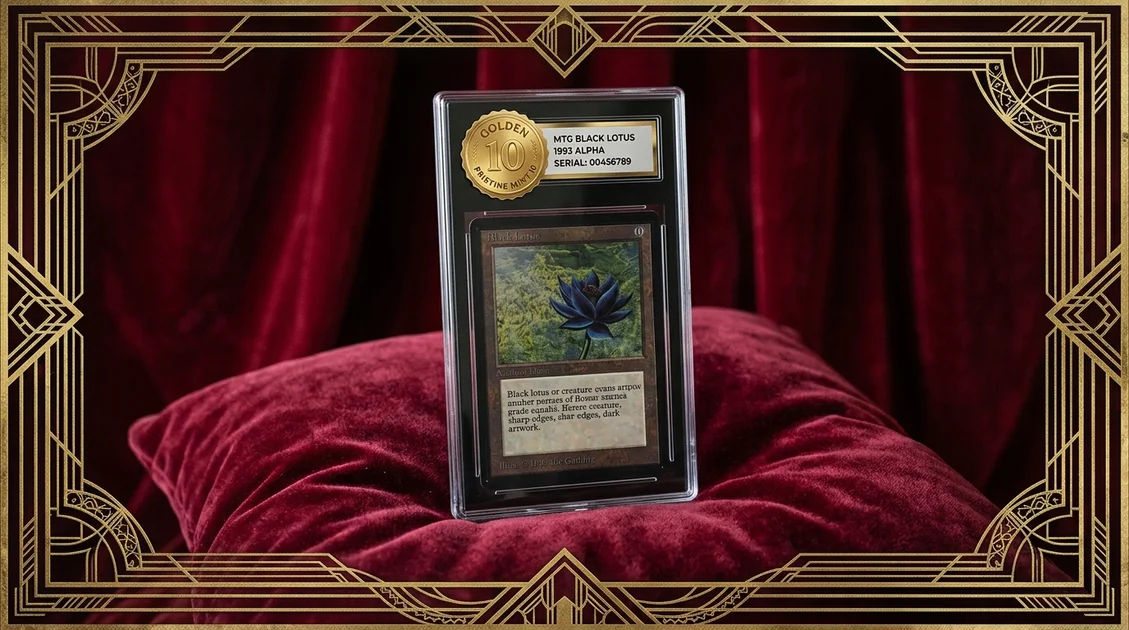
For an Alpha Black Lotus or a numbered Secret Lair, grading is basically insurance plus value multiplier.
When grading does NOT make financial sense
1. Cards under $100 raw
The grading fee ($30–$60 per card) eats the margin unless the card grades 10, and you can’t predict grades reliably. A $50 raw card graded PSA 9 might be worth $70 after fees — barely break-even.
2. Played cards
Moderately Played or worse grades 5 or lower, which commands a discount relative to raw. Submitting an MP card to grading makes it harder to sell, not easier.
3. Modern Standard/Pioneer staples
Cards printed in Standard-legal sets in 2024–2026 have huge supply. Even the chase mythics trade raw at a price grade slabs barely improve. Only the premium finishes (serialised, Secret Lair, showcase foils) are worth grading in modern Magic.
4. Cards with obvious condition issues
If you can see whitening on the edge, a corner ding, or a surface scratch, don’t waste $50 confirming it’s a 7. The grading service won’t give it a 9 or 10, and 7-grade slabs trade at a discount to raw NM.
The grading process (2026)
- Pre-grade your own cards. Use daylight and a 10× loupe. Be brutally honest. If you think it’s a 9, it might grade 8. If you think it’s a 10, it probably grades 9.
- Pick a service. PSA has the most recognisable brand; BGS has the most useful sub-grades for Magic; CGC is cheapest with decent turnaround.
- Submit online. All three services accept submissions via their websites. You’ll need a paying membership ($50–$150/year depending on service) and a per-card fee.
- Ship carefully. Rigid top-loaders + team bags, inside a bubble mailer, registered + insured. Grading services lose cards occasionally — always insure.
- Wait. Turnaround runs 30–90 days standard, 7–15 days express (at 2–3× fee). 2026 turnaround times are finally close to pre-pandemic norms.
- Receive slab. Sealed rigid plastic case, grade + serial number, card visible on both sides. Can’t be opened without destroying the seal.
Resale considerations
Graded slabs have their own market dynamics:
- eBay is the primary resale venue for graded Magic. BIN and auction both work.
- TCGPlayer accepts graded cards but has a smaller audience for them.
- Heritage Auctions handles high-end grades (PSA 10 Alpha cards, serialised 1/X mythics).
- PWCC runs weekly auctions and is a trusted consignment venue for graded Magic.
Selling a PSA 10 Alpha Lightning Bolt will yield better results at Heritage or PWCC than eBay due to the buyer pool.
Crossover grading
If you own a card graded by one service and want it graded by another, “crossover” grading is available. BGS and CGC both offer PSA-crossover programs where they’ll re-grade a PSA slab and issue their own grade if equivalent or higher. Useful if the PSA grade is 9.5 (which BGS would call 9.5) and you want the BGS market premium.
What grading does NOT tell you
- Whether the card is authentic under very sophisticated counterfeiting. Grading services catch most fakes but not all. 2023 saw a handful of “graded fakes” slip through.
- Whether the card is a re-sealed slab. Rare but possible. Always buy from reputable sellers.
Scrytics and graded cards
Scrytics’ collection tracker records individual copies and lets you keep certification details in the copy notes. Track slabbed cards alongside the rest of your inventory and verify graded-card prices against recent sales before valuing them.
The short answer
Grade: Alpha/Beta rares, Reserved List cards over $500, select iconic modern mythics at potentially high grades, investment-horizon cards.
Don’t grade: anything under $100 raw, played cards, common Standard/Pioneer chase mythics, cards with visible condition issues.
If you’re not sure, post photos in r/mtgcollectors or r/mtgfinance and ask before submitting. The community has seen thousands of submissions and can tell you whether a specific card is grade-worthy.
Available now on iOS
Scan every card. Price every printing.
Scrytics is the Magic: The Gathering card scanner, collection tracker and price database for iPhone and iPad.